
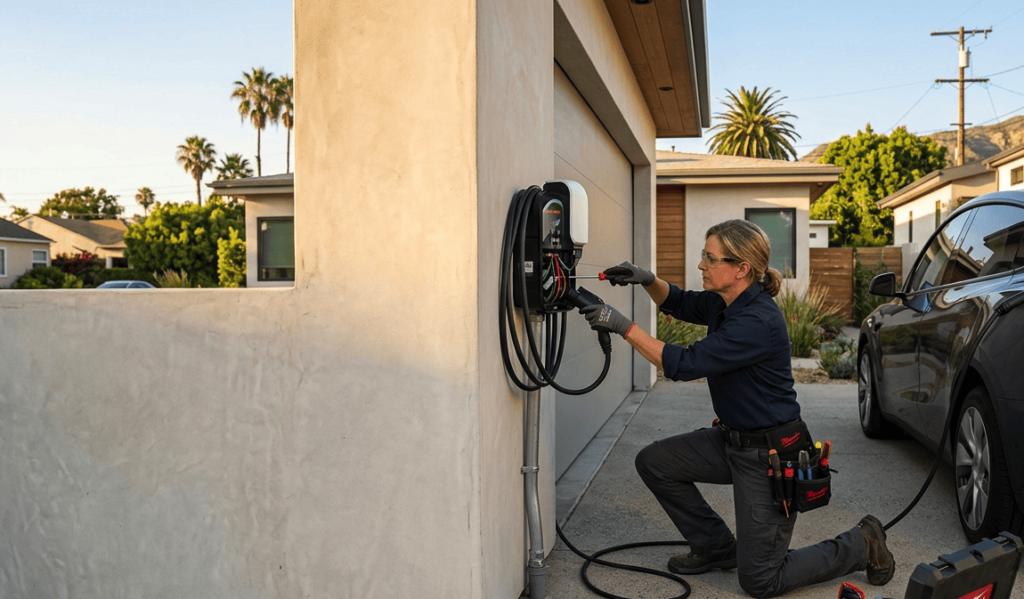
Home EV charging in Los Angeles can be frustrating when an older electrical system, limited panel capacity, or a complicated installation creates unexpected problems. Many homeowners want reliable access to charging without making daily trips to public charging stations. Understanding the installation process ahead of time can make it easier to plan a safe and practical setup for your home.
This guide explains the main steps involved in EV charger installation, from checking your home’s electrical capacity to choosing the right charger and preparing for the installation. It also covers common issues homeowners may encounter in Los Angeles and how proper planning can help avoid unnecessary delays.
Understanding EV Charger Installation at Home in Los Angeles
EV charger installation involves more than plugging a charging device into an outlet. A professional installation starts by checking your home’s electrical system and determining whether it can safely handle the additional load.
Older homes may have electrical panels or wiring that were not designed for the demands of modern EV charging. In areas such as Redondo Beach, homeowners may need to address the capacity of an existing panel before installing a high-power charger.
An electrical load calculation can help determine whether the existing system can support a dedicated 240-volt circuit. If the electrical system needs additional capacity, an Electrical Panel Upgrade can be considered before the EV charger is installed.
Other important factors include:
- Electrical load calculation: Determines whether the existing electrical system can support the charger.
- Charger type: Level 2 chargers can provide faster charging than standard household outlets.
- Circuit requirements: A dedicated circuit may be needed for the EV charger.
- Installation location: The charger should be positioned conveniently near the vehicle while allowing for safe cable routing.
- Permitting: Homeowners should account for applicable electrical permits and inspections during the installation process.
For homes with older or outdated wiring, [Electrical Wiring Installation] may also be relevant when preparing the electrical system for a new EV charger.
Home EV Charger Installation: Checking Your Electrical System
Before starting a home EV charger installation, the electrical system should be evaluated to make sure it can handle the additional demand. This is particularly important for older Los Angeles properties where the existing panel, wiring, or circuits may have limited capacity.
The electrician can review the panel’s amperage rating, available capacity, wiring condition, and the location where the charger will be installed. This helps determine whether the existing system can support the required circuit without creating unnecessary strain.
If the panel does not have enough capacity, an Electrical Panel Upgrade may be needed. Upgrading the panel before the charger installation can provide the electrical capacity required for the new EV charging equipment.
It is also important to consider the condition of existing wiring. Homes with older wiring may require additional electrical work before the charger can be installed safely. If wiring problems are discovered, Wiring Fault Diagnosis can help identify issues that need to be addressed.
EV Installation and Choosing the Right Charging Setup
The next step in an EV installation is deciding what type of charging setup makes sense for your vehicle and home. Different EVs and chargers have different electrical requirements, so the installation should be planned around the equipment being used.
Level 1 charging can generally use a standard household outlet, but it is slower than Level 2 charging. Many homeowners who want faster home charging choose a Level 2 setup that uses a dedicated 240-volt circuit.
The location of the charger also matters. Ideally, the charger should be positioned close enough to the parking area that the charging cable can reach the vehicle comfortably. Outdoor installations require equipment and installation methods that are suitable for the environment.
Think about your current needs as well as future ones. If you expect to own multiple electric vehicles or add other electrical equipment to your home, the available electrical capacity should be considered before installation.
Home EV Charger Install: Preparing the Installation Location
A home EV charger install should be planned around where you normally park your vehicle. Choose a location that provides convenient access while keeping the charger, cable, and electrical components away from areas where they could be damaged.
In neighborhoods such as Woodland Hills, the layout of a property can affect how wiring reaches the charging location. A longer cable route may require additional conduit or electrical work, particularly when the panel and parking area are separated.
Before installation begins, the electrician can determine the most practical route for the wiring. This helps avoid unnecessary bends, exposed wiring, or installation changes later in the project.
If the installation requires changes to nearby outlets or electrical connections, Outlet Replacement Service may also be useful when existing outlets are damaged, outdated, or unsuitable for the planned electrical work.
EV Home Charger Installation and Permitting
Permitting is another important part of EV home charger installation in Los Angeles. Electrical work involving a new dedicated circuit or other changes to the home’s electrical system may require permits and inspections.
Planning for this step early can help prevent unexpected delays. The installation should follow applicable electrical requirements so the completed system can be inspected properly.
Homeowners should also avoid assuming that an EV charger is simply a plug-in appliance. The electrical work behind the charger is an important part of the installation, particularly when a new circuit, panel work, or wiring changes are required.
An Electrical Code Inspection can be useful when electrical work needs to be reviewed for code-related concerns.
EV Charger Installation in Los Angeles: What to Expect
EV charger installation in Los Angeles generally starts with an assessment of the home’s electrical system and the proposed charging location. Once the electrical requirements are understood, the installation can be planned around the charger and the home’s available capacity.
The process may include:
- Electrical assessment: The existing panel and electrical system are reviewed.
- Charger planning: The appropriate charger and circuit requirements are determined.
- Location selection: The best location for the charger is identified based on vehicle parking and wiring access.
- Electrical work: The required circuit and wiring are installed.
- Charger installation: The EV charging equipment is connected and installed according to its requirements.
- Inspection and testing: The completed installation can be checked to make sure the system operates correctly.
Proper planning is especially important when an older home needs electrical improvements before the charger can be added.
Los Angeles EV Charger Installation for Older Homes
Older Los Angeles homes can present additional electrical challenges during a charger installation. A property may have an older panel, aging wiring, or limited electrical capacity that was sufficient for the home’s original electrical demand but is not ideal for modern EV charging.
For example, a home built several decades ago may need a panel assessment before a high-power Level 2 charger can be added. In some situations, existing wiring may also need attention.
Homeowners should address these issues before connecting the charger rather than trying to work around an electrical system that cannot safely support the additional load.
If your home has older electrical wiring, Knob and Tube Rewiring or Aluminum Wiring Upgrade may be relevant depending on the type and condition of the existing wiring.
Common Mistakes to Avoid During EV Charger Install
One common mistake is choosing a charger before checking whether the home’s electrical system can support it. The charger may be suitable for the vehicle but still require electrical upgrades before it can be installed.
Another mistake is attempting a DIY installation without understanding the electrical requirements. Incorrect wiring, grounding, circuit sizing, or connections can create safety problems and may lead to repeated breaker trips.
Skipping required permits or inspections can also create problems later. It is better to understand the installation requirements before work begins so the project can be completed correctly.
Homeowners should also avoid placing the charger where the cable creates a trip hazard or where the equipment could be exposed to unnecessary damage.
If an electrical problem occurs during or after an installation, Emergency Electrical Repair can help address urgent electrical issues.
Planning for Future Electrical Needs
An EV charger may not be the only major electrical upgrade your home needs. Homeowners may eventually add other high-demand equipment, appliances, lighting, or smart-home technology.
Planning ahead can help you understand how the EV charger fits into the home’s overall electrical capacity. If you are considering additional electrical improvements, Smart Home Wiring can support future connected-home projects.
Surge protection may also be worth considering for homeowners who want to protect electrical equipment from voltage surges. Surge Protection Installation is another service to consider when reviewing the home’s electrical setup.
The goal is not simply to install a charger, but to make sure the home’s electrical system is prepared for how you plan to use it.
Conclusion
A properly planned EV charger installation can make charging at home much more convenient for Los Angeles homeowners. The process starts with checking the electrical system, determining the required circuit, choosing an appropriate charging setup, selecting a practical installation location, and handling applicable permitting and inspection requirements.
For homeowners considering a home EV charger installation, evaluating the electrical panel and existing wiring before the project begins can help prevent unexpected problems. Professional planning is particularly important for older properties with limited electrical capacity.
For professional help with EV charger installation in Los Angeles, visit the EV Charger Installation service page to learn more about the available electrical service.
Need help with an EV charger installation? Call RF Electrician Inc at (213) 946-1347.
Leave a Reply